The Truth About Verity Sparks – CBCA BotY 2012

There have been some great novels shortlisted recently that are set in the Victorian era. Tensy Farlow and the home for mislaid children and Doug MacLeod’s fantastic The life of a teenage body-snatcher both come to mind. Apparently they fall into the category of Steampunk under the sub-genre ‘gaslight fantasy’. Although according to this wikipedia article they are, like, totally different. Hallmarks of the genre include brave and highly intelligent hero(in)es who debase themselves to comic effect, malicious Moriarty style villains equal in bravery and intelligence to our heroes but determined to use these gifts to malevolent ends and lots of orphans. The truth about Verity Sparks is one such novel.

Queen Victoria

Verity is, of course, an orphan. Before the novel began she was being raised by some unsavoury no-hopers until finding employ as an apprentice milliner. A run-in with a client sees her discover her gift for finding lost things and lose her job.

From the dedication page I was really peeved by this novel because it is one of those books that has a regularly recurring word in it that I don’t know how to pronounce (telee-ag-tavism? teeleeg-tavism?) like the name Cinna in The hunger games (which we now know is pronounced Len-ny Kra-vitz), it just doesn’t roll of the tongue. There is good reason for such a stupid sounding word though as is explained on page 66 but that is no excuse. Back to the plot.

Downcast and out on the streets, things turn from bad to worse for Verity but she (rather too quickly for my liking) finds succour in the form of the Plush family. The family run a style of detective agency and, as you can guess, Verity fits right in. Verity gets her gift into a bunch of cases and each reveal a little more of the story’s main problem – what is the truth about Verity Sparks?

This book has got great characters. They are all a bit hopeless and wonderful. Susan Green, a newcomer to the BotY shortlist, does a great job of describing them and, in doing so, exhausts the full spectrum of lovely. Miss Lillingsworth, for example, is “a tall, thin, middle-aged lady with a lot of nose, not much chin, and such big teeth she could have eaten an apple through a picket fence. She was very badly dressed, and very, very plain – but when she smiled, you forgot what she looked like. And her eyes were lovely.” The story also has a very healthy political undercurrent about the role of women in society and the strictures of class, particularly on the young. It is kind of like Oliver Twist in this way but without all the awkward antisemitism.

If there is anything wrong with this book, it is that there is too little of it. With all the stuff that happens in it, Green simply doesn’t have the time to befuddle us properly. She also panders to the younger audience in not letting us be traumatised enough along the way. Certainly if the book were to run to three installments we could have had a really good, long, terrifying kidnap scene. Or Verity could suspect the wrong person and be led down a really wonderful, harrowing red herring. Or she could work out whodunnit early in the piece but not be able to let on for whatever frustrating reason right until the very end. Or…

Perhaps it is best to just enjoy it as it is.

Posted in BotY, CBCA, Shortlist 2012 | 2 Comments

The Last Viking – Picture BotY 2012

It seems that I am completely alone in my lukewarm feelings about this book. According to this blog about the process of writing The last Viking, the book has been shortlisted for an impressive number of awards and earlier this month won the Crystal Kite award from the Society of Children’s Book Writers and Illustrators (but the people at the internet can’t tell me who has won the award in the past so I don’t know if I should be impressed or not). Even HH liked it!

The last Viking tells the story of a little boy with the heebee geebees. He is afraid of the dark, he is afraid of the wind and he is afraid of pirates. What he should be afraid of is going to the park. During a trip to his grandparents’ house, Knut née Josh, gets some unsupervised time and is HORRENDOUSLY bullied by a bunch of kids who are undoubtedly going to take up smoking and end up unhappy or the CEO of a bank.

Somehow he manages to untie himself and goes home and retreats into a world of fantasy like Anders Breivik. Well, not quite like Anders but he does try to set the backyard on fire. All of this, in Josh’s mind or reality or something, catches the interest of the ancient Norse gods who intervene on his behalf or something.

The book is a very rich experience. The pages are lined with Viking runes and there is a key in the back so that young cryptographers can practice decoding. There is also an extract from the gigantic tome that Josh’s grandpa gave him that gives us some background into Viking history. Furthermore, as CBCA judge Michelle Prawer points out, the illustrations add a great deal to the story – nobody in the book tells us why Josh is being shipped off to his grandparents place but, from the illustrations, we do know.

In my humble opinion, the book lacks a bit of a moral compass and doesn’t really give kids any guidance on dealing with the issues that Josh has (both anxietywise and bullywise). A cleverer ending might have built that in. But who am I to ciriticise? The book is a great adventure and if I put myself into the shoes of a kid reading this I reckon I would be pretty thrilled about all that horrible stuff that happen to Josh in the park and that there are gods just hanging around wearing ace hats and intervening on decendents’ behalf. No doubt Jorgensen wished something like this was around when he was a little berserker.

Posted in BotY, CBCA, Shortlist 2012 | 5 Comments

Picture BotY 2012 – Look, a book!

Amy and Louis deservedly won the Picture Story Book category in 2007 and so it should have because it is one of the best picture story books of all time. Their follow-up in Clancy and Millie was less spectacular. Fortunately, Look, a book! recaptures that lost magic – not that Look, a book! is anything like Amy and Louis (which might have been Clancy and Millie’s problem). Phew.

image: http://creativity103.com/

Illustrator Freya Blackwood has turned her attention to a deserted, almost dystopian, landscape where chickens are caged in up-turned shopping trolleys and forests of telephone poles crowd the skyline. How perfect a setting to highlight the preciousness of a book and the ability it gives us to escape from our surroundings into our imagination.

Yet is is almost as if the contents of the book are secondary to its value. As, once the children learn its contents, they become finite whereas before they have read (or had read to them) the book, its contents are endlessly possible. This book may be eponymously about a book but, for the children in it, it is a recognition of the transmutative quality of books.

Some books feel like the illustrator has drawn her work in response to the story (and sometimes it seems like they haven’t read the story at all) but this feels the opposite. Gleeson’s laconic contribution to the work accentuates its sparseness but it is the illustrations that carry the story along.

Blackwood’s illustrations are evocative of Tan’s work (I swear I recognise that cloud on the second last page from somewhere) but, while Tan’s drawings have a finished quality, Blackwood’s are energetically incomplete. It is through contrast to the desolately bleak landscape that we are drawn into the world of fantasy where back-yard thunderboxes transform into sailing boats and discarded coke bottles become flying carpets. Upon closer inspection, even the scarier aspects of the illustrations have a softer tone (is it just my imagination or does the size of that dog’s feet suggest a gamboling puppy?). These elements draw the story to its beautiful and inevitable conclusion.

In Look, a book! Gleeson and Blackwood have moved into more abstract territory and it is easy to see why the CBCA judges approve. It is a strange, quiet exploration of the pregnant joy a new book can provide.

Posted in BotY, CBCA, Shortlist 2012 | 1 Comment

Bungawitta – CBCA BotY 2012

Spoiler alert: this review excessively implies the ending.

With the drought officially broken last month it seems that this fun little book is a bit too late. That being said, maybe we should see Emily Rodda’s contribution to the shortlist as a parable for the climate as a whole – we had a big drought, Al Gore came along and made us all see that changing our light bulbs would fix everything and then the drought ended. Well, the people of Bungawitta have sort of taken the same approach.

If you want to have fun, don’t corporatise it, creativise it. On the back of a crippling drought, the people of Bungwitta decide that the way to revitalise their community is to have a festival. This isn’t any old festival with huge queues, horrible toilets and a lingering tinnitus but a Mud Sculpture Festival (why not, one of the best things that I have ever been to was the Ploughing World Championships, loads of people watched that docco on the spelling bee and, since moving to Western Vic, all anyone ever talks about is the Australian Kelpie Muster in Casterton. Well, all I ever talk about…).

The book highlights the self-satisfying, deeply-felt smugness that can be achieved by pulling together and doing something as a community. It seems that everyone in it has something to contribute to their little project (even Olympic standard cynicism) and we are a bit on the edge of our seats about whether they can pull it off.

Having everyone else leave town is a great device to distill down your list of characters to the outsiders, the weirdos, the cynics and the too-young or too old to flee. We really want these guys to succeed because we fear that they are a bit close to the edge and failure could be the last stop before a Laurence Oates style exit.

In a bold move, the town accidentally enlist the help of the ABC to promote their festival. This is just one example of the way that Rodda carefully lays little foreshadowing plot eggs for her young readers to pick up and wonder at.

Emily Rodda (not her real name) has two entries in the shortlist this year. She is also no stranger to the BotY and has apparently written four award winning books (!). I have only heard of one of them and have read even less but this is definitely less of a reflection on the books as it is on me – what can I say, I came in to this party while it was already in full swing. As it is the only Younger Reader I have so far been able to get my hands on, it is currently my front runner for the prize but I am ready to be proved wrong. Nevertheless, with double dip and home ground advantage, Rodda must be feeling pretty good about her chances.

There is certainly no harm in Bungawitta (the book, not the place) unless you don’t want your kids covered in mud. And a sunny little story like this can warm you up a little in this drab, cold autumn.

Posted in BotY, CBCA, Shortlist 2012 | 2 Comments

CBCA Shortlist 2012 – The Golden Day

Fans of my earlier work will know that I think this book is going to win the CBCA Book of the Year Award this year and here is why:

Dubosarsky has written impressively in the past melding personal drama with historical events but The golden day has taken this to a new level. The story follows a group of Grade 4 girls who lose their teacher in a park on a school excursion in 1967. The combination of the gothic plot and setting and the silly and whimsical machinations of the 11 year old girls creates a juxtaposition that is distinctly unsettling. Yet the harshness of the reality of their situation and the comical portrayal of the girls keeps us utterly transfixed. How can we read about these naive, vulnerable little things without being gripped by a desire to protect them?

Yet it is the girls who are doing the protecting. As depicted in the Charles Blackman painting from which Duborsarsky drew her inspiration, little girls know how to keep a secret. Not in a ‘we’ve-accidently-killed-the-bishop-and-now-we-need-to-cover-it-up-while-digging-the-hole-deeper-and-deeper-for-ourselves-to-hilarious-consequence’ type of way but in an enthralling, conspiratorial, Omertà kind of way.

Ronald Ryan’s hanging and the Vietnam war play interesting cameos in the story adding to its dark tone. The way that the characters interact with  these macabre and controversial events epitomises the authenticity of Dubosarsky’s writing. As Miss Renshaw says, how horrible indeed to be hanged in the morning – particularly on such a bright and pleasant one.

The author has set the scene perfectly but it is purely a McGuffin for the real cut and thrust of the story – an exploration of youth. While it is comforting to imagine that the transition from childhood to adulthood is a discrete one, the author reveals that this is entirely untrue – children have very adult thoughts about friendship and loyalty (or maybe adults hold very childish ones). There is also the notion that, alongside their vulnerability, children possess a deep sense of resilience and an ability to accept things as they are even when they are very strange. A characteristic that often becomes lost to us as adults.

Readers will get a sense that Dubosarsky is mining her own youth for inspiration and we are privileged that she has done so. Like Blackman, Dubosarsky is a creative who has produced something unconventional and idiosyncratic. It is a work of art that, like one of our own formative experiences, penetrates the psyche and colours our view of the world thereafter.

Don’t let the age of the protagonist put you off, The golden day deserves to be a crossover success far more than the wizard, the vampire or the one about the kids-killing-kids (ok, the one about the kids-killing-kids was amazing and deserves to be a crossover hit too). Good writers say that one should write about what one knows – Dubosarky knows good writing. The golden day will make you appreciate how bad other books are in contrast to this inciteful masterpiece.

Posted in BotY, CBCA, Shortlist 2012 | 4 Comments

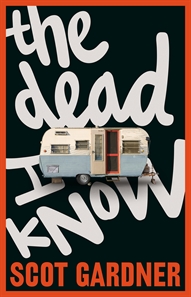
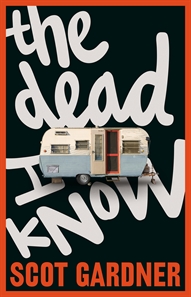
CBCA shortlist goes underground – The Dead I Know

You know that Jackie French would have to stuff up a book pretty badly not to get shortlisted but one author who consistently earns his guernsey in the list is Scot Gardner. His experiences as a counselor and tech teacher give him great insight into kids who have fallen afoul of education and just need someone to recognise that they have value. I dared a kid the other day to read the prologue to his fantastic Legend of Kevin the plumber and put it down thereafter if he didn’t enjoy it. He didn’t put it down. I would have given him this book instead but I was reading it.

The dead I know was an absolute pleasure of a book to read. The story follows this great, maleable, damaged mass of a young man called Aaron Rowe. Aaron is taken under the wing of a funeral director who ably teaches us just how much people enjoy and benefit from helping others. As fans of Gardner could guess though, this book is no trip to Krispy Kreme. Aaron (in a narrative device close to my heart) is afflicted with sleepwalking. He doesn’t know where he goes or what he does and the results are both amusing and horrifying.

The setting, the characters, the dark humour and the constant presence of dead bodies create a menacing undertone like they are all grains in a keg of dry power that a spark like Aaron is about to set off to catastrophic affect. This is a truely wonderful book and it is a pity that it won’t win the award because The golden day will but I personally would rather that Scot stays in the underground anyway. So there.

Posted in BotY, CBCA, Shortlist 2012 | 4 Comments

CBCA Shortlist Part II: When we were two

As a former child himself, I understand, Robert Newton has an ability to write stories about Aussie kids in an extremely authentic manner. When we were two follows the story of two brothers fleeing from an abusive home. The story is not overly didactic and Newton should be applauded for giving the audience (particularly a younger audience) a great deal of ownership in filling in the blanks. With hints and a distinct old time feel, he slowly reveals that the setting of the story is NSW during WWI. Curious readers will get a lot out of fleshing out the background of this story.

This edition to the shortlist has not been universally enjoyed however. HH suggested that books like this could be responsible for a decline in reading. I, on the other hand, like extremely slow and boring books so I really loved it. I don’t know if the CBCA should be condemned for shortlisting books that kids will be bored by or applauded for recognising the diversity of readers. Theoretically teenagers are as diverse readers as the rest of us so some of them should really enjoy a well-crafted piece of historical fiction and most of them will just want to read about sex.

Those who do manage to get through this novel will be excused if they develop a serious case of mean world syndrome. The kids in this story are critically ill-starred. However, even if the fates of these two brothers seem exaggeratedly cursed, the essential message is that when you are down there are people who would do just about anything to help you out (unless they’re beating you up and setting fire to your hair, as you can see, it’s a layered book).

Those who persevere with this novel will be rewarded with a story that provides heroism and humour. It contains some concepts that will require handholding for lower secondary students but it would make a great class novel and an even better extension text for keen students of history.

Posted in BotY, CBCA, Shortlist 2012 | 4 Comments

Off to a good start – Ship Kings

From the moment that I began to read this book I was off. McGahan’s writing style has that ability to transport you so deeply into the world of the character that you can’t help but daydream. His experiences of packing his bag and setting off were so reminiscent of my own that it was paragraphs later that I noticed that I had not been paying the slightest attention to what Dow – the book’s protagonist – was up to. His villages are alive with the sights and smells of daily life, his forests dark with a deep earthy aroma and his seaside towns so salt encrusted that you could preserve fish just by rubbing them on the walls of the local tavern.

This is adventure writing at its best. McGahan uses suspense masterfully to carry the story along but doesn’t leave you waiting too long for the payoff making it a rewarding read for the impatient. His characters are not particularly likeable but there is enough sexual tension to make you keep reading and the previously mentioned great scene setting is matched by frequent and exciting bursts of action. Best yet, McGahan’s story is not partronising and allows the reader to experience real and challenging events without saccharine reprieves.

Dow is a classic outsider. He doesn’t fit into the tree-felling mold of his birth and he doesn’t really fit into the monotonous seaside life that he thinks he is craving at the book’s outset. Like most seaborne adventurers, he is a loner with an ability. The book follows Dow as he defies convention, leaves his predetermined vocation and heads for the ocean, a path that takes him right to the gates of the infamous ship kings – a group of naval warlords who rule the ocean with their advanced technology and merciless application of ‘justice’.

The book is a great scene-setter for the next three novels in this series (and how McGahan will complete the rather ambitious foreshadowing contained in the prologue in four books is anyone’s guess) and sets high expectations for more great sea-faring adventure writing. A word of warning, Dow, as all seafarers from days-gone-by is a pretty enthusiastic drinker (in defiance of the government suggestions of delaying starting drinking for as long as possible for those between 17 and, well, death I suppose). Don’t let this put you off suggesting it to kids, just use it as an opportunity to talk to them about the impacts this will have on Dow’s brain’s development and how, if the story were more accurately written, the main piece of action may have been Nathaniel holding back Dow’s hair as he evacuates his stomach into the ocean.

The CBCA have introduced us to a fantastic new series in The Ship Kings and The Coming of the Whirlpool will entertain adventure seeking readers too old for Ranger’s Apprentice but not yet old enough for Master and Commander.

For some great teaching resources and reviews on The Coming of the Whirlpool, check out Allen & Unwin’s page here.

Posted in BotY, CBCA, Shortlist 2012 | 1 Comment

CBCA Book of the Year Hijack

Over the next few months I am hijacking the blog to spout my opinion on books featured on the CBCA Book of the Year Shortlist. The old eLearning stuff will still be up here and accessible by the links on the right-hand side but this front page will be going BotY crazy.

The 2012 shortlist has a lot to be excited about. Firstly, to blow my own horn, the Jackie French book that I suggested would make the list…made the list. Secondly, to give credit where credit is due, Mardy was right in suggesting that I read Scot Gardner’s The Dead I Know. I would have less reading to do if I had’ve taken either of our advice. That being said, I am looking forward to reading both of these books for the first time.

Aside from these, there is heaps (heaps!) of other great stuff on the list. Robert Newton is on the list again and Freya Blackwood is on there. Twice! And being a big fan of Nick Bland (of The Very Cranky Bear fame) I am really looking forward to seeing what these two have come up with together.

I’ve managed to score Ship Kings from the local library so I am sure you will all be sitting on the edge of your seats looking out for my review of that one. In the meantime if you have anything to say about any of the books, please feel free to comment/spoil them for all of us in the comments box below.

Posted in BotY, CBCA, Shortlist 2012 | 3 Comments

Animoto

There is very little to be said about Animoto that is not already on their website but here goes…

What is it?

Animoto is a fremium website that creates videos out of your photos and video clips, sets them to music and allows you to put titles and other movie-type things on it. This means that, at no cost, you can create a 30-second video using Animoto but, for a fee, you can create a video of any length that uses all of their fancy features and formats.

How can I use it?

Animoto can be used in the same way that you would programs like MovieMaker. The advantages over MovieMaker are that you don’t have to have the software and that the ability to upload to other web forums like YouTube are very integrated. The disadvantage is that everything you want to put onto your video needs to be added via the web creating bandwidth and time issues.

Animoto can be used to create book trailers and other image-heavy presentations. It can also be used to create a really nice little film about an excursion or something that can be shared with your students and their parents.

Here is an example of one that I just put together…

I know that this isn’t extremely fantastic but it does give you a fair idea of how the thing works and what you can do with it.

How to do it

Once you have created an account, making the video is pretty straightforward.

1. Create and account

2. Log in and from the home screen, click the giant ‘Get Started’ button.

3. If you’re interested in using the free version, select a theme that suits you and click the tiny, tiny link underneath the huge Purchase Video button that says ‘or make a 30-second video for free.’

4. Choose a song, upload your images and video, create text slides and don’t forget to create a title by clicking the pencil icon next to the generic title at the top of the page.

5. Edit your video by dragging the image and title icons around or drop them in the blank space underneath the editing pane to forget about them for a while. The order that these are in will be the order that they come up in our video once you click the Produce Video button.

6. Click the Produce Video button. Your video will be sent to your email inbox.

Tips

When using photos and videos over the web in this way, make sure that they are as small as possible to make uploading quick. You can use a program like iPhoto on the Mac or Windows Picture and Fax Viewer on the PC to do this (if you’re having trouble, just Google ‘How do I resize images for the web?’ and 73,500,000 results will come up).

The higher the number of images you use, the shorter time each will appear on the screen so don’t overload it. I used about eight images and that was probably too much.

Make sure that videos uploaded to the web protect the students’ right to privacy and that ones created by students put forward a good image of the school.

Once you have created your first, simple video, you will be able to explore the other functions that are available and play with the features like spotlight and whatnot.

Have fun with it!

Posted in Animoto, Videos, YouTube | 1 Comment