Get excited

Natasha of Book Bonding has come and gone and left trail of books in her wake. She has passed her practiced eye over the collection and made sure that we have all of all of the books in each of the series that we are currently collecting. She has also given us some advice on the books that are running out of her store in the Young Adult section and some sneaky suggestions of books that are bound to be big.
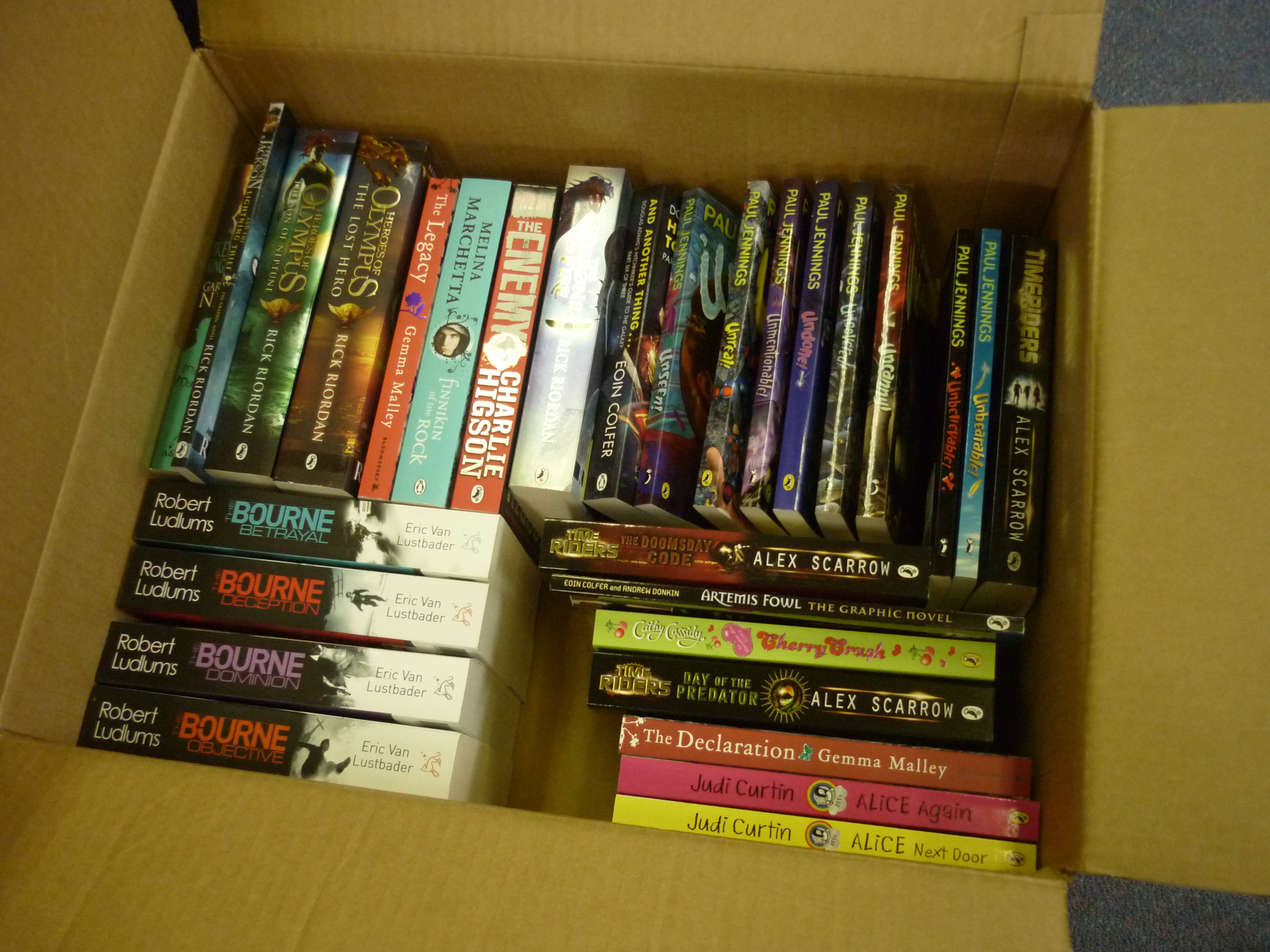
Box of new goodies

Take a peak into one of our boxes of goodies. We have the sixth book in the increasingly inappropriately named Hitchhikers Guide to the Galaxy trilogy. This one has been written by Eoin Colfer because Douglas Adams had the cheek to die part way through writing the series. You might also notice a slew of new Bourne books if you are into crime and have moved on from Tintin (we also have a load of Tintin books on the shelf if you want to regress). There are some shiny new copies of Paul Jennings’ Un… series. And, best of all, we have a new copy on Melina Marchetta’s Finnikin of the Rock. It is the first book in the unexpectedly fantastic Lumateran Chronicles which is fast becoming a fantasy must-read on par with the Obernewtyn Chronicles. I have started reading this series and don’t really care what happens in the real world anymore aside from how Marchetta is coming along with the next book.

If any of these books take your fancy, come and hassle Julie about getting it catalogued and processed – she loves that. And please share your enthusiasm about these with your students, it would be great to get a buzz going about all of these exciting new acquisitions.
Posted in New Books | Leave a comment

Crow Country | Review | CBCA BotY 2012

So of course the one junior book that I hadn’t reviewed carried the day. Can’t blame the CBCA, it is a truly gripping story. So why didn’t I get around to reading it? Here we go:

Time-slip is to me a singularly unappealing genre. I have the same reaction to time-slip (novels that involve a character actually or by imagination travelling through time) as some people do to fantasy. There is something about the fusion of fantasy and historical fiction – two genres which I really like – that makes it the bruised banana that gets left in the bottom of the bowl until it goes black and gooey.

Secondly, when I got my hands on Crow country, I had just finished reading Nanberry: black brother white (still no wiser on the capitalisation of that one) and didn’t really feel like going back-to-back on Australian history. Instead I escaped into the world of the Golden door and what a pity since, not only did that not win, but it wasn’t the most amazing book either.

If I had’ve let myself get more than half a page into Crow country the first time I started reading it – with its gloomy little girl sulking about how miserable she was – I would almost certainly have finished it. The blurb, ‘time-slip’ label and opening paragraphs give away no clues that this is a seriously compelling murder mystery.

Sadie is a young girl who has been forced by her flighty mother to move to the country. Having moved to the country myself a number of times in the past, I can sympathise that it is a conflicting event – not only are you surrounded by the unfamiliar but there are a bunch of things that you miss from the city that you won’t ever find in the country. They are simply not there. On the other hand, you are constantly surrounded by the beauty of the place, have the ability to create new friendships and can begin to form a relationship to the area without the background noise of the big smoke. As such, if you are trying to rub it in to someone (as Sadie is) that you are unequivocally miserable, you will have a bit of a tough time. Enter Sadie’s family history.

Sadie is in the middle of carrying out this psychoterror on her mum when she starts to have a series of turns where she is thrust into the past. In what becomes an excellent allegory for the misappropriation of land from its traditional owners, she learns that her grandfather was involved with a seriously dodgy character. The type of dodgy character that can make you dirty just by associating with him. Money, power and race are all powerful themes in the story that follows – the scars of the actions of the past are carried through to blemish the relationships of present generations.

In this story there are deep questions about reconciliation and, more importantly, there are clear examples of the ways that the deep cuts left by Australia’s history can be mended over time or rended further apart. Constable has put together a beautiful setting, engaging plot and questionable characters to create a novel that is both meaningful and enjoyable.

Posted in BotY, CBCA, Shortlist 2012 | 2 Comments

We’ve got tablets!

According to the rather overblown promotion video, the Intuos 4 is how humanity comes to life. At least I think that is what it says in amongst all the quick edits, bright lights, fancy graphics and the dance music that the kids love these days.

The library has 8 of these things kicking around if you want to try one out. It is like a giant touch pad that uses a stylus (pen) to control the cursor so that you can write, draw, highlight and point. Here’s how to use one:

Setting it up

The pad has a battery that needs charging before it will work. To charge it, simply plug the USB end of the cable into the USB hole on your PC and plug the other end into your tablet in the mini USB hole that is located between the on/off slider and the bluetooth button (these will be important later).

While it is charging, put the installation disk into your PC and run the installer. This doesn’t take long and doesn’t require you to make any difficult decisions aside from whether you are a lefty or a righty. After intalling the software, you can start using your tablet by sliding the on/off slider to on (the switch should be red on the right-hand side). This will prompt Windows to think for a while and do something or other and then you are good to go. Try moving the pen around the tablets drawing surface, if the cursor moves on your screen, victory!

What now?

The tablet can be used with all sorts of programs from Paint.NET (which may or may not have appeared on my desktop after installing the Intuos software) to Photoshop to the Snipping Tool built in to Windows 7. It is also great for turning your data projector into a Claytons interactive whiteboard.

There is information on using the tablet on the installation disk which should give you a pretty good idea of how to use it to its full potential. And if your PC has bluetooth, you can connect the tablet wirelessly and then use your tablet while you are wandering around the room(!).

Here’s something I did all by myself:

Pleased with that.

And here is an example of what can be achieved with experience and ability.

Posted in Intuos 4, Tablet | 1 Comment

It’s your library

If you haven’t been into the library for some time, it might be worth paying us a visit to see what we’ve got. The library has a great collection of Young Adult fiction and non-fiction, reference books, posters, audio-visual material and equipment, games, magazines and laptops.

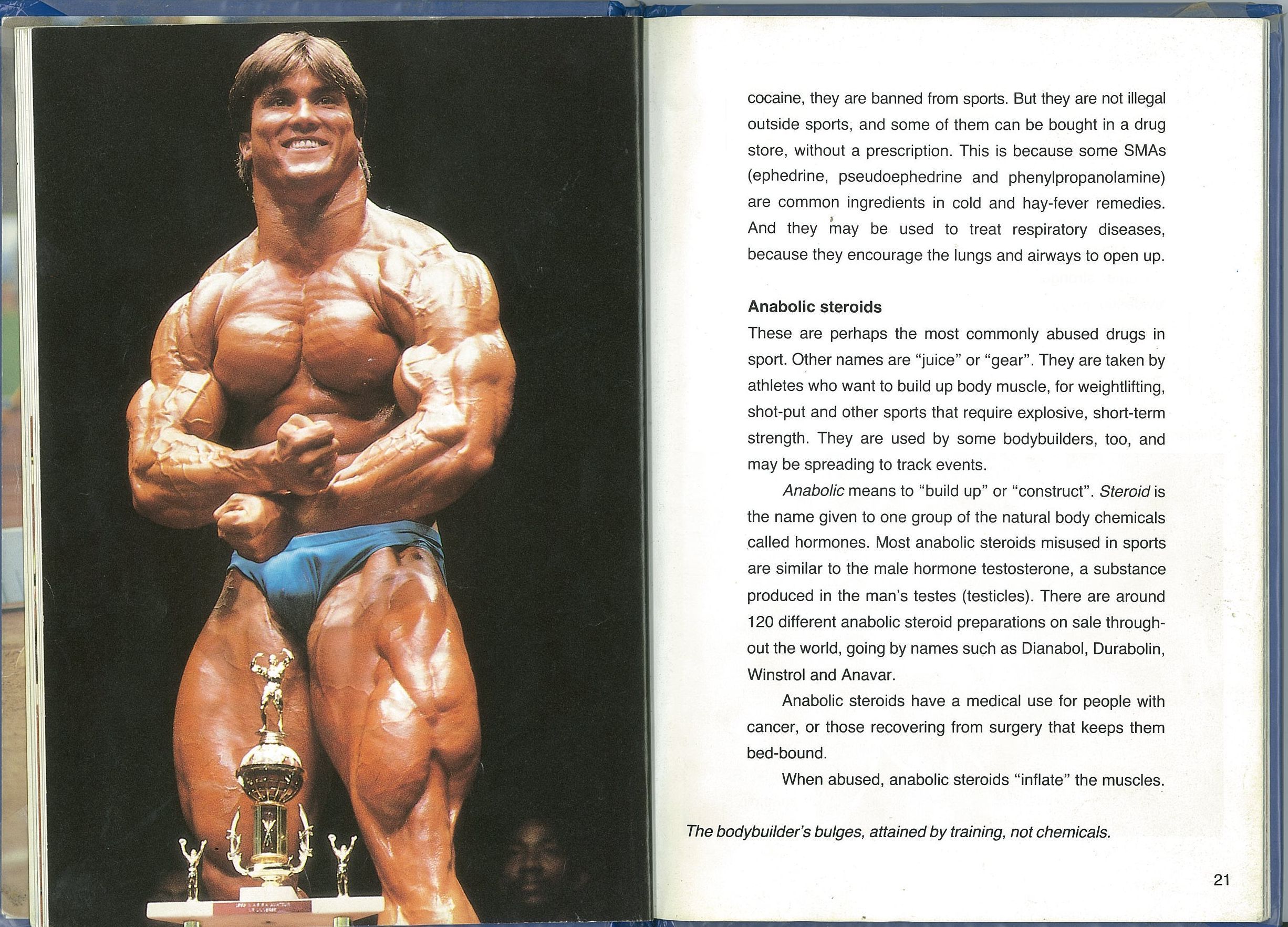
“The bodybuilder’s bulges, attained by training, not chemicals” from Drugs, Steroids and Sports (1989) by Janet Mohun

Our non-fiction collection has been weeded and updated regularly to ensure that the books we have are relevant and current.  That doesn’t mean that some classics don’t slip through the net as is evidenced by the prime example pictured above (look at that neck!).

From our more relevant collection, the kids seem particularly keen on the sporty books and we also have various odd requests (someone asked for a book on programming last week). We have just rearranged the biography section that lives at the end of the non-fiction shelves. If the subject of the biography is obvious (like, it’s about Brendan Fevola) then you will find it under the first three letters of the person’s name (i.e. BIO FEV), if the subject is less obvious (say it’s about the Sudanese child soldier Emmanuel Jal whose biography is entitled Warchild), then the call number is the first three letters of the title (i.e. BIO WAR).

If you need books on a particular topic, don’t forget you can search for them on the catalogue by subject as well as title and author. We can also put together a basket of books on a particular topic that you can take to your class or use here in the library for assignments. Furthermore, if you want a particular book or books on a topic that isn’t represented in the library, let me know and I’ll order it in for you.

We have an excellent fiction collection including many of the books that have achieved notoriety for different reasons. We have books that have been made into films and serieses, such as The Hunger Games, The Hobbit, The Vampire Diaries, and books that have won awards such as the CBCA Book of the Year winners Crow country and The dead I know.

Out the back we have various other classroom resources including text books, reference books, posters, games, dvds and (for the moment) videos. The cupboard behind my desk is stuffed full of media equipment some of which can be borrowed for use in classes. If you need a camera, send me an email and I’ll make sure one is charged and ready to go.

I am also a resource that can be booked and used. I can give you advice on resources, copyright and instruction on using all sorts of technologies, I am happy to come and talk to your classes about research skills, referencing and avoiding plagiarism, latest releases, literacy and reading for pleasure and if you want to do some team teaching, let me know!

Above all don’t forget: it’s your library.

Posted in From the archives, Library resources | 4 Comments

Hello Hoppers Crossing!

Thank you to everyone who has welcomed me to my new home in the library at Hoppers Crossing Secondary College!

This blog is my main line of communication between myself and the world beyond the library walls. It covers a range of topics from eLearning to all things library. You can subscribe (for free, of course) by putting your email address into the field labelled ‘Subscribe’ to the right of this post. This will mean new posts will emailed to you instantly, clogging your inbox and adding to your feelings of guilt and hopelessness (well, that is my experience of blog subscriptions anyway).

Almost, Usborne Guide to Computer (and Video!) Games. Almost.

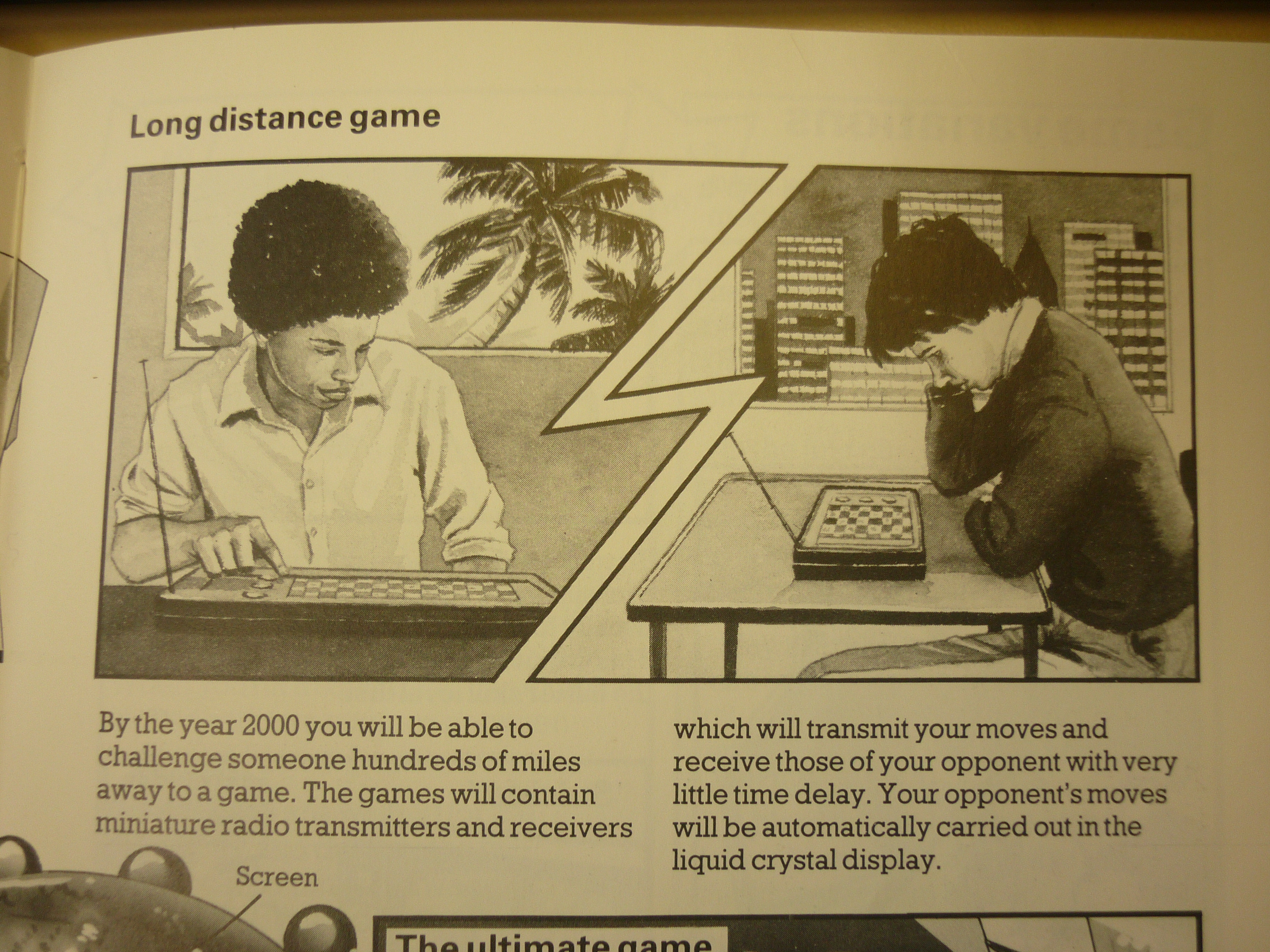
Meanwhile I’ve been digging in the workroom and discovered the future according to the  Usborne Guide to Computer (and Video!) Games 1982. I can’t believe that this amazing resource has been gathering dust on a bench somewhere in the back room.

The library at HCSC has a great collection of fiction and non-fiction resources (that are largely more current than the above) as well as other resources that can be of benefit when running classes like cameras, drawing tablets, laptops and games. If you need anything in particular or would just like to come and see what we’ve got, stop by.

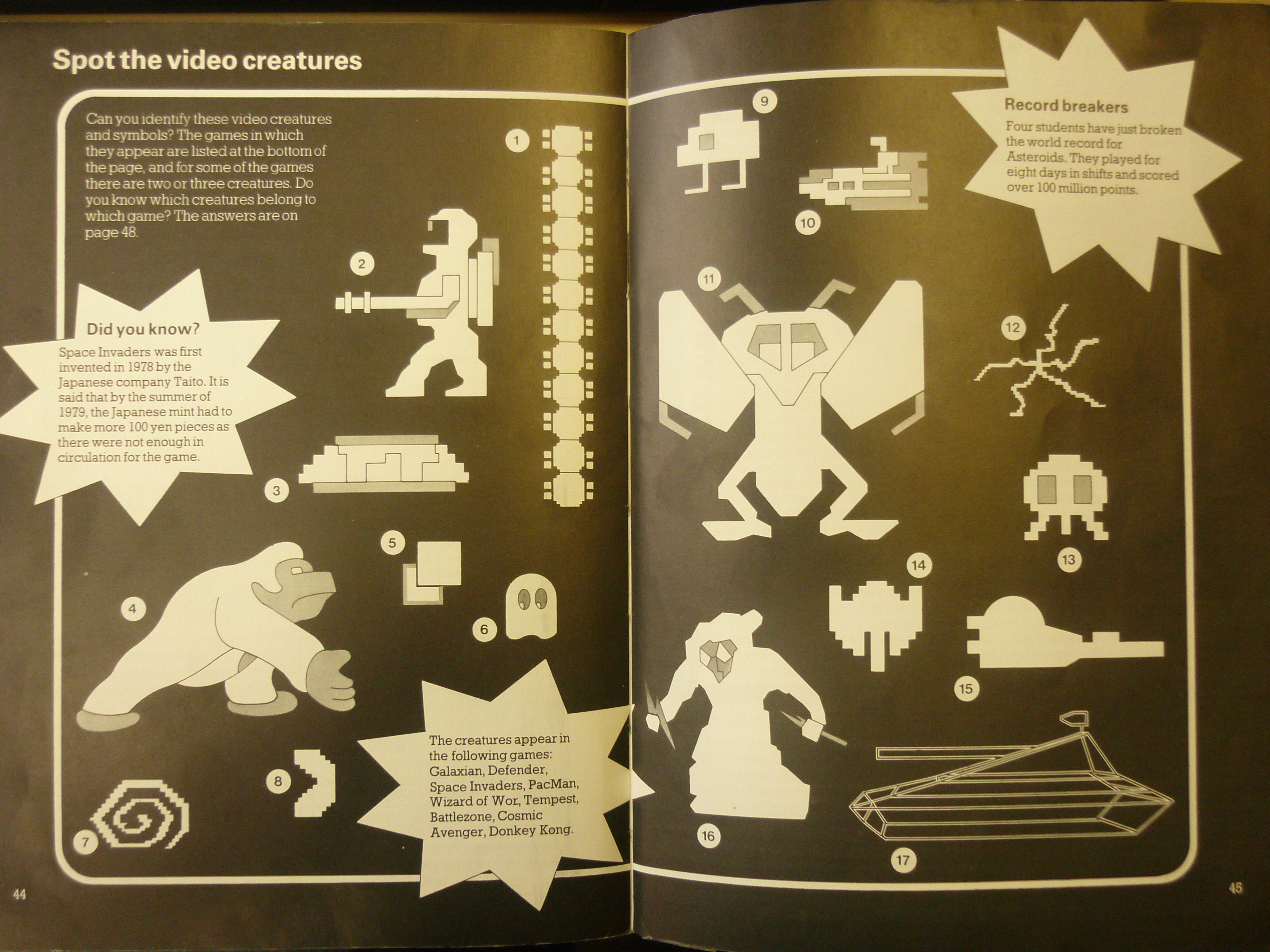
If you want to test yourself against 80s computer game nostalgia, try to name these historical gaming giants (answers below):

Spot the video creatures

Also, if you would like to know anything about blogging through wordpress, how to create your own blog or how I have created this wizardry whereby I am able to talk to you but not be in the same room, drop me a line, my extension is 248.

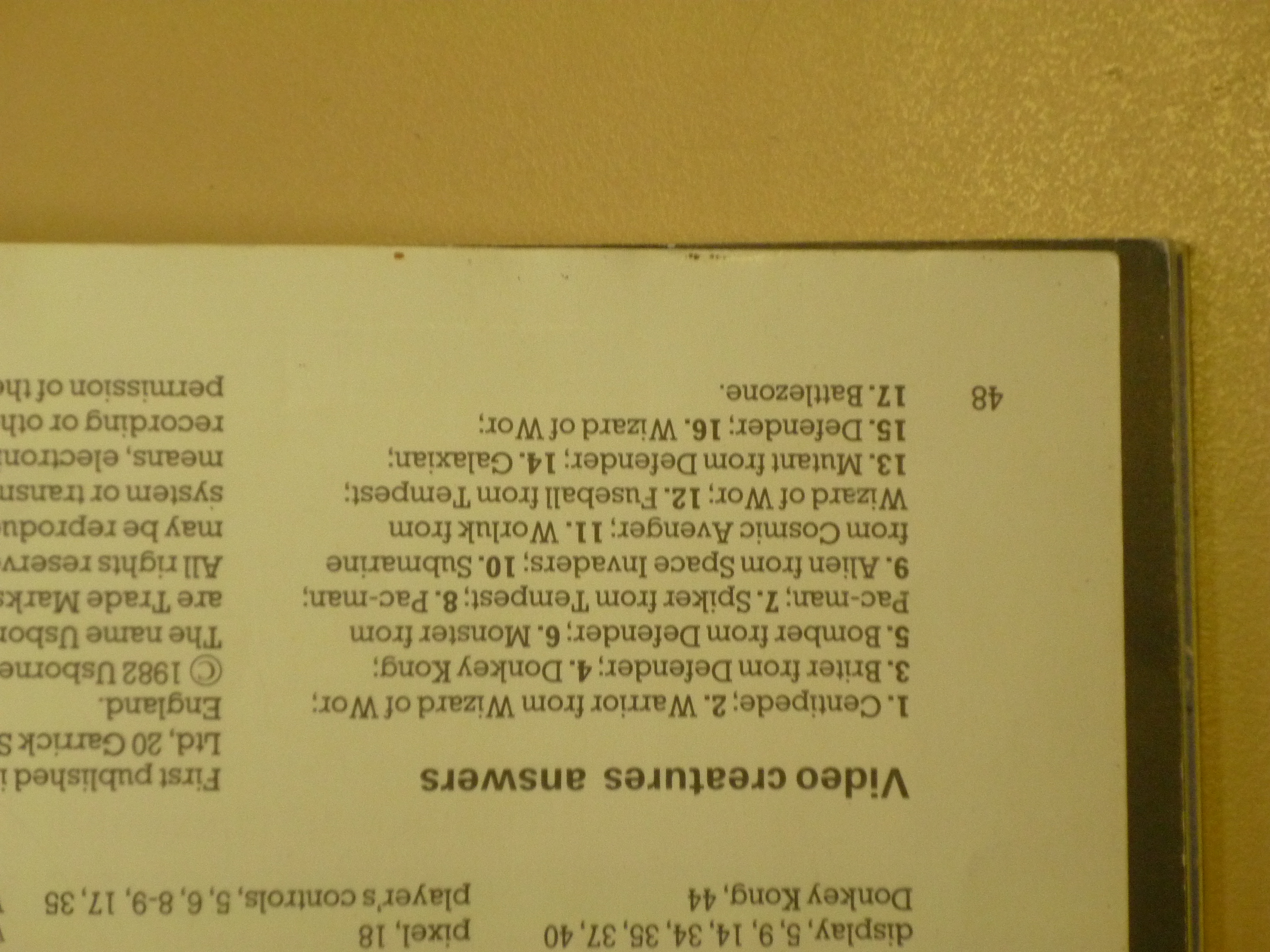
Answers


Posted in Uncategorized | Leave a comment

Congratulations!

The winners of the 2012 Children’s Book Council Book of the Year Award have been announced.

Congratulations to Scot Gardiner, Kate Constable, Nick Bland & Freya Blackwood and Bob Graham! Of course, I need to eat my words as I said that Gardiner’s book wouldn’t win and, in the chaos of moving house, I haven’t even read Crow country yet (they would choose the one chapter book that I didn’t read…).

Thank you to the CBCA and particularly the judges of the award for choosing such an interesting and varied range of books for me to enjoy.

As always, the winner is reading.

Posted in BotY, CBCA, Shortlist 2012 | 2 Comments

The Golden Door | Review | CBCA BotY 2012

Having written the Deltora Quest series (among other things), Emily Rodda is a practiced hand at fantasy. The golden door is exactly what you would expect from such a writer. It ticks all the fantasy boxes with magical things and strange beasts, a which-door-will-he-choose scene and a clearly plotted out progression of suspense and pay-off making it an enjoyable read which will likely be totally forgotten before years end but provided escapist entertainment on the train for me nonetheless.

20120816-214238.jpg

Rye is the third son of a poor family who work on the wall that protects his hometown of Weld from ravenous flying beasts known as skimmers. When I use the word ‘protects’ I mean ‘is utterly useless’ because, as I mentioned skimmers can fly. Anyway, all his brothers and finally himself go on a quest to sort out where these things come from. It is through this that Rodda introduces one of the great redeeming features of this book, a spunky heroine called Sonia. Rye and Sonia slip the bounds of Weld and head towards a realm where a tyrant is doing something nasty that they have to stop. A bonus in this is that stopping it doubles as a mechanism to try to save his brother Dirk (where does she get these names?).

More could have been done to make this more than just another fantasy book. On the other hand, I found myself willingly reaching for it and it certainly helped me to forget the troubles of moving house for a bit. Hmmm, I think the second one in the series is already out…

Posted in BotY, CBCA, Shortlist 2012 | 1 Comment

Nanberry: Black Brother White | Review | CBCA BotY 2012

Some may feel that, in an earlier post, I may have implied that Jackie French doesn’t earn her spot in the shortlist year after year, that would be true. But let me say now that French’s writing is consistently good and always covers interesting historical material in an approachable fashion. Never more so than when she is writing about Australia.

Nanberry: black brother white (not too sure how to capitalise that..?), follows the events at Sydney Cove from 1788 to 1800 and then a little bit at 1823. It covers well-known historical facts and events – such as the appalling effect of European illnesses on Australia’s First People; the relatively low death rate on the First Fleet compared to the second and third; the near starvation of the fledgling colony and the spearing of the first governor – as well as well-known historical figures, such as Bennelong, Phillip and Tench, and introduces us to lesser-known figures in Rachel Turner, Nanberry and Surgeon White.

The book shows French’s indefatigable enthusiasm for research and the clever way that she can build a fictional story out of the facts that she discovers. It would be fair to say that she is the children’s version of Kate Grenville although Grenville doesn’t regularly put out a book every year (along with picture story books and all the other stuff French does).

The characters are realistic but, in books such as this, I am always cynical about the progressive attitudes of the characters. Some of them are obviously based on fact – Surgeon White, for example, seems to have had a pretty good grasp on vegetables and their role in the prevention of scurvy – but others are pure invention.

The modern language is (appropriately) used to engage the book’s younger audience but, as a result, the language is free of the constant reference to God and fate that are present in historical writings and would have been present in their conversation. So too with the First People’s religion which is equally absent.

French has worked hard to show the good side of the characters when one is there to be shown. She creates a bit of a hero out of Surgeon White despite her biography at the end which paints him as a bit of a stuffed shirt. She also makes Australia out as an alright place to be despite the hardship faced by the newcomers (and their negative influence on the already-theres) and it wouldn’t be a Jackie French book if it didn’t have loads of references to food.

Nanberry: black brother white is an awkward story to tell (because of, y’know, the invasion/genocide thing). How much that effects the reader is probably up to the reader but the book’s overwhelming message is that there were those on both sides who were able to find a middle ground between the two cultures which made their own lives easier and more enjoyable.

Posted in BotY, CBCA, Shortlist 2012 | 2 Comments

A Bus Called Heaven | Review | CBCA BotY 2012

What a strange book. A bus called heaven starts before the imprint and continues on in a strange, chaotic sort of way.  Ostensibly this is the story of a ghostly pale girl who claims an abandoned bus for the community in which she lives and then defends the community’s right to keep it. There is a distinctly political undercurrent in the book too. Graham explores the role of junk as a catalyst for community cohesion, takes aim at bureaucracy and ensures that a range of social and cultural groups are represented throughout.

The book is very real. The abandoned bus hasn’t been sanitised – it looks like someone has been living in it – the town is full of factories billowing smoke and the people are fat and thin, tall and short, young and old. All of this forms a counterpoint to the warming glow of community spirit. The message is that no one is going to make our world beautiful for us so we need to do it ourselves. So too with building relationships.

There is something jarring about the way that the book starts before the title though and the poems that bookend the story are lovely but, because of their position, lack emphasis. There are also too many characters so it begins to feel like a roll call. On the other hand, each character brings something to the book so it is hard to see how it would work in their absence.

A bus called heaven brings together important ideas that are worthy of being shared with the young. Read it with your kids and then have a barbeque and invite the neighbours.

Posted in BotY, CBCA, Shortlist 2012 | 2 Comments

For All Creatures | Review | CBCA BotY 2012

As teachers we have the ability to abuse our role in indulgent ways. Forcing our students to perform the text of Isabella’s garden  in rounds is one such indulgence. If you haven’t partaken, get on it.

For all creatures mines similar territory to Isabella’s garden but is more alliterationy than rhymy. As such it doesn’t have the same flow that the 2010 CBCA Honour Book but it certainly does impress upon the verbivores amoung us.

Millard’s latest book is a celebration of vocabulary. It thrills us with beautiful terms to describe natural and human phenomena. The illustrations employ naive art techniques to add to the old world feel of this book creating an overall vibe that is reverent and pantheistic.

This addition to the shortlist is lyrical and colourful but it lacks the narrative that Isabella’s garden has. It is beautiful and, although I haven’t fallen in love with it, I’m sure people will.

Posted in BotY, CBCA, Shortlist 2012 | 1 Comment